
At Lingsar, the interesting part is not simply that an old temple complex has survived. It is the feeling that several layers of Lombok’s religious life are still visible in one place. A visitor can walk through Hindu sacred spaces while also encountering traditions associated with the Sasak Wetu Telu community. That shared history is what makes lingsar temple lombok more than a quick photo stop.
The complex rewards slower attention. Gates separate the courtyards. Shrines carry different meanings, while ritual areas are more than decorative architecture. Knowing a little of the background before you arrive makes the visit feel less like sightseeing and more like entering a place that local communities still regard with care.
This guide stays with the cultural side of Lingsar. It looks at its history and the relationship between Hindu and Wetu Telu traditions. It also explains Perang Topat and respectful visitor behavior, with the layout placed in context.
History of Lingsar Temple
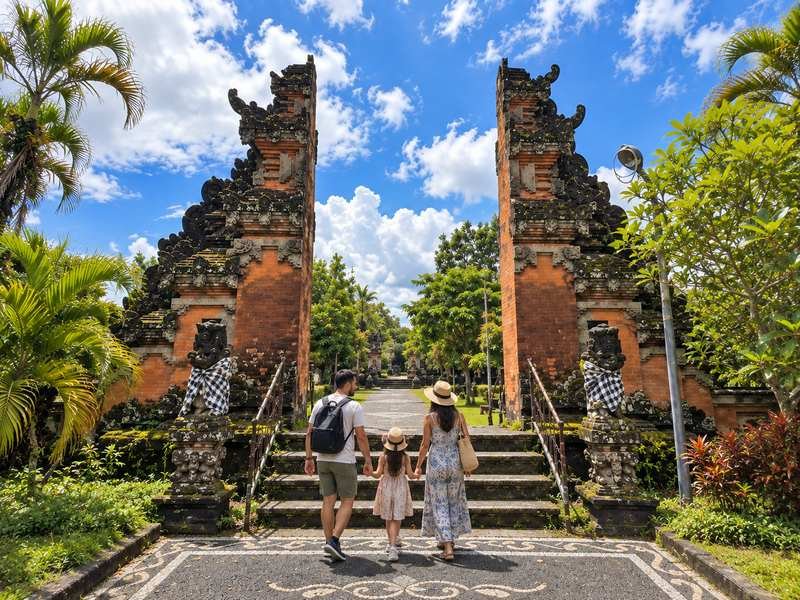
Lingsar is generally associated with the period of Balinese influence in Lombok and is commonly dated to the early eighteenth century. The site developed as a religious complex rather than a single stand alone shrine. Its history is tied to Balinese Hindu worship on the island, yet the story does not end there.
What makes the place unusual is the long relationship between Hindu practice and local Sasak belief. The complex became known as a space where different religious traditions could exist beside one another. That is why a visit to pura lingsar temple lombok is often discussed in terms of coexistence rather than architecture alone.
For visitors who want broader background before seeing sacred places on the island, our guide to cultural shore excursions in Lombok adds useful cultural context without changing the character of the Lingsar visit itself.
Hindu and Wetu Telu Traditions at the Complex
The Hindu side of Lingsar is linked with Balinese religious practice, while the Kemaliq area is especially associated with Sasak Wetu Telu tradition. Wetu Telu is often simplified in travel writing. It is better approached as a local religious tradition shaped by Sasak culture and a history of layered influences.
Inside the complex, that relationship is visible in the way different sacred areas are respected by different communities. The point is not that every belief is identical. It is that the site has long carried meaning for more than one tradition.
This is also why casual behavior can feel out of place. People may be praying while visitors are looking around. A quiet voice and a little patience go further here than trying to photograph everything quickly.
Main Courtyards Shrines and Architectural Features
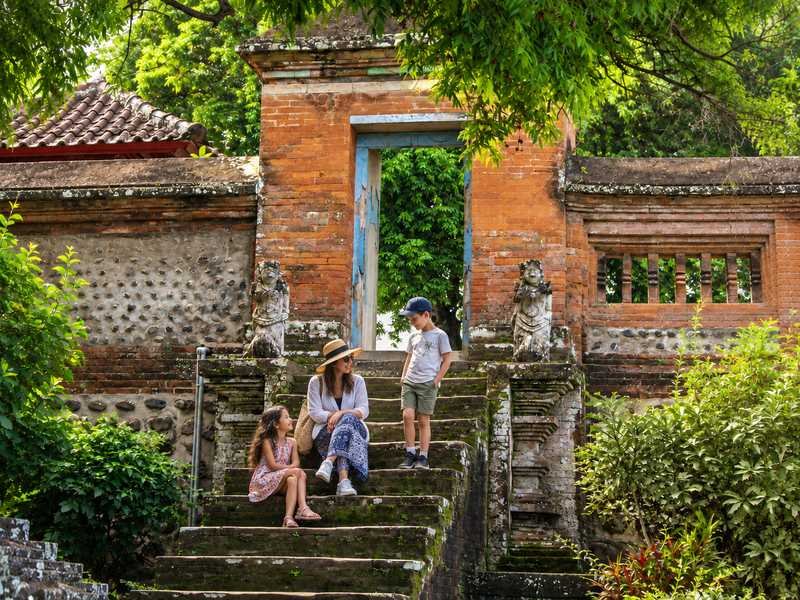
The layout of lingsar temple lombok indonesia is best understood as a sequence of sacred spaces rather than one building. Visitors pass through gates into courtyards with shrines and ritual structures. The Pura Gaduh section is connected with Hindu worship, while the Kemaliq has particular importance in Sasak tradition.
Look at how the spaces change as you move inward. Walls create separation and gateways mark transitions. Courtyards give ceremonies room to gather around particular shrines.
Lingsar feels different from a coastal temple setting. If you are curious about that contrast, the Batu Bolong Temple shore excursion page introduces another Lombok temple environment where sacred space meets the coastal landscape.
Perang Topat and Major Cultural Traditions
Perang Topat is the tradition many visitors hear about before coming to Lingsar. During the ceremony, participants throw small packets of rice cake called topat. From the outside, it can look playful. Within its cultural setting, however, the event carries religious meaning. It also expresses communal harmony.
The wider ritual context brings Hindu and Sasak communities into the same cultural event. It is one reason Lingsar is often discussed as a shared site. The timing follows a traditional calendar, so visitors should not assume the ceremony falls on one fixed Western calendar date every year.
Other details deserve attention too. Offerings may be present around active worship areas. Parts of the complex can remain quiet even when the outer grounds are busier.
Visitor Etiquette at Lingsar Temple Lombok
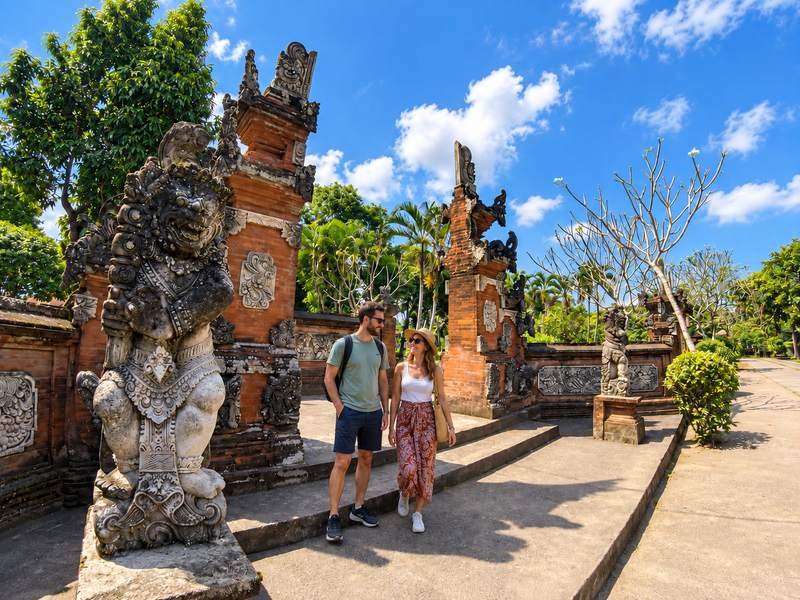
Respect here is mostly about reading the space before acting. Dress modestly and follow local guidance about a sarong or sash. If a ceremony is underway, give worshippers room. Sacred areas may have access rules that are not obvious from the entrance.
Photography deserves the same care. Taking a general photo of architecture is different from pointing a camera at someone during prayer. Ask before photographing people at close range, and do not step into a restricted area just for a cleaner angle.
Quiet behavior is enough when it is paired with appropriate clothing and attention to local instructions. The temple is a living religious place, not a museum set.
What Should You Notice Rather Than Rush Past?
Pause at the transitions between courtyards. Notice which areas are active and which feel more private. Watch how offerings are placed without touching or moving them. Those small observations can explain more than a list of architectural terms.
If Lingsar is part of a wider day in Lombok, Lombok private tours can be arranged around your interests. At lingsar temple lombok, it is worth leaving enough mental space to listen to local guidance instead of treating the temple as another box to tick.
Is Lingsar Temple only a Hindu temple?
No. Hindu worship is central to the complex, but Lingsar is also closely associated with Sasak Wetu Telu tradition. Its cultural importance comes partly from that shared history.
What is the Kemaliq at Lingsar?
The Kemaliq is a sacred area within the complex that is especially significant in Sasak tradition. Treat it as an active religious space rather than just another architectural feature.
When does Perang Topat take place?
Perang Topat follows a traditional ceremonial calendar rather than one fixed Gregorian date. Anyone hoping to witness it should confirm the current year’s schedule locally before planning around the event.
What should visitors wear?
Modest clothing is the safest choice. Follow local instructions if a sarong or sash is requested, especially when entering an active sacred area.
Can I take photos inside the complex?
General photography may be possible, but context matters. Avoid interrupting worship and respect restricted spaces. Ask before taking close photographs of people.
Seeing Lingsar with the Right Expectations
The strongest reason to visit lingsar temple lombok is not one dramatic landmark. It is the chance to see how history and living belief sit side by side in a place that still carries meaning for local communities. Come curious. Keep your voice low, and let the site reveal itself at its own pace.
If you would like local guidance as part of a private day in Lombok, reserve through the official Lombok Shore Excursion website and ask Wayan and the team what kind of cultural visit fits your interests. The team can explain practical options while keeping the temple visit respectful and realistic.