
Mayura Water Palace Lombok makes more sense when you slow down. At first glance, it can look simple. A broad pond fills the center, with a pavilion rising from it and old trees around the edges. Beyond the walls, modern Cakranegara carries on. The real interest is not how many things there are to photograph. It is how power met religion here, and how both became part of Lombok’s layered culture.
The palace grew from the era of Balinese rule in western Lombok, yet it sits on an island with a strong Sasak identity. That overlap gives the site its character. You are not looking at a frozen museum. You are looking at a place shaped by different communities and different periods of local history.
A short visit can still be rewarding. Knowing why the central pavilion exists and how the water garden was used turns a quick photo stop into a more thoughtful look at Cakranegara’s past.
History of Mayura Water Palace Lombok
The complex dates to the eighteenth century, when the Balinese Karangasem kingdom held political influence in western Lombok. It was originally associated with a royal garden and later became known as Mayura. The name is commonly linked with the Sanskrit word for peacock, a detail often connected with stories about peacocks being introduced around the grounds.
Over time, Mayura became more than a royal retreat. It was tied to administration and public affairs in Cakranegara. The site also belongs to a wider historical landscape of Balinese palaces and temples in the Mataram area. That is why Mayura works well as an introduction to the island’s mixed cultural story rather than as a stand-alone monument.
If you enjoy places where architecture and local history meet, our guide to cultural shore excursions in Lombok gives broader context for other heritage experiences.
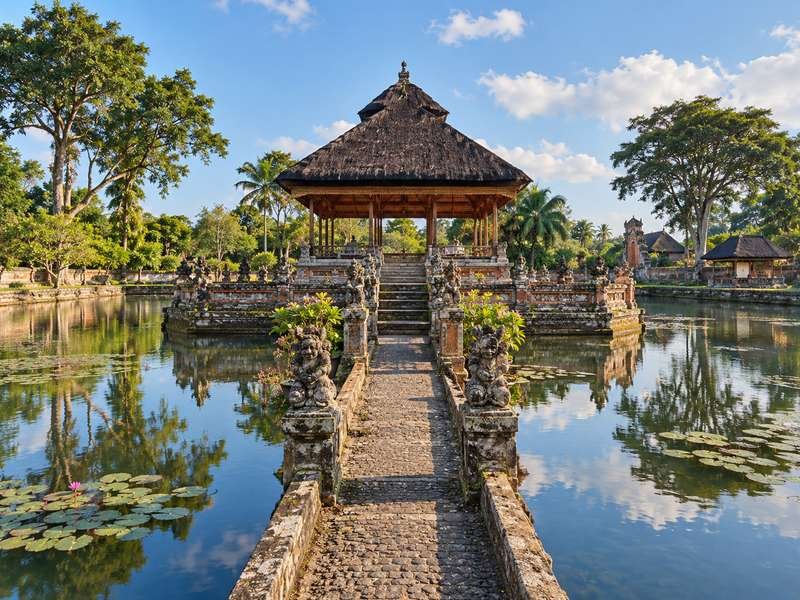
The Bale Kambang and palace layout
The feature most visitors remember is Bale Kambang, the pavilion that appears to float in the middle of the pond. A narrow causeway connects it to the grounds. Water creates distance from the outer space, giving the pavilion a sense of formality while keeping the scene calm and open.
Historically, Bale Kambang was used for meetings and official matters. That makes it different from a decorative gazebo built only for leisure. When you stand near the water, imagine it as a working part of a royal complex where discussions once took place.
The wider layout feels restrained rather than grand. Gates and religious elements frame the central area. Look at how the pavilion sits within the pond, then how the pond is enclosed by paths and walls. The design guides attention gradually toward the formal center.
Balinese and Sasak cultural influences
Mayura is often described as a Balinese heritage site, and that is an important part of the story. The architecture and Hindu religious references reflect its connection with the Karangasem rulers. But stopping there makes the explanation too neat.
Lombok is culturally layered. Sasak communities form the island’s largest ethnic group, while Balinese communities have had a strong presence in the west for centuries. Cakranegara developed through that contact. At Mayura Water Palace Lombok, the more useful perspective is to notice how political history and everyday local life have existed close together.
This is also why a Mataram city shore excursion feels different from a beach-focused day. Around Mataram and Cakranegara, heritage is woven into living neighborhoods.
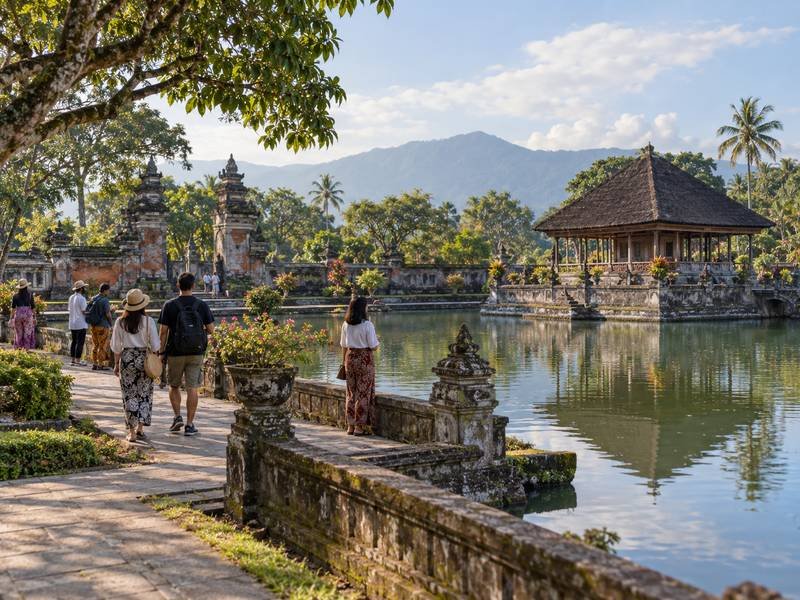
What visitors can see during a short visit
Most people naturally begin with the pond because Bale Kambang draws the eye straight away. Walk around the edge and look back from more than one angle. The pavilion changes character as the trees and reflections shift behind it.
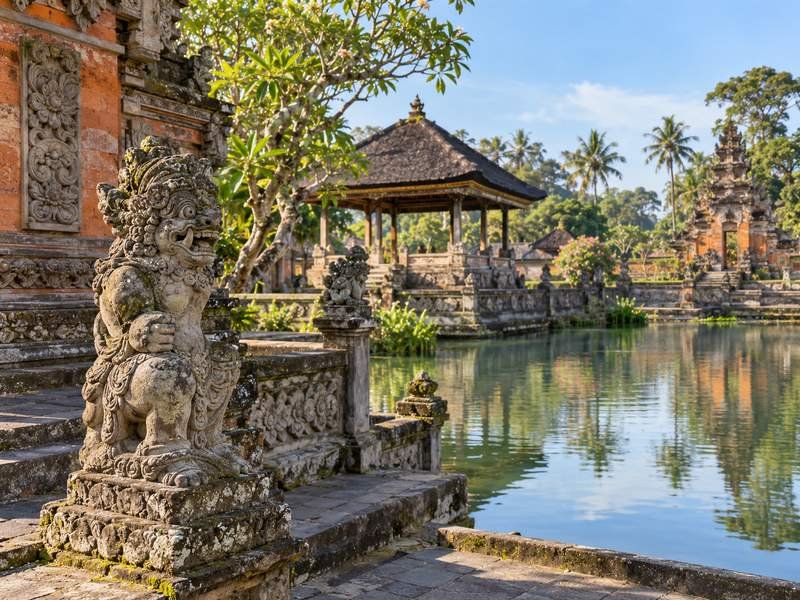
Pay attention to the gates and temple details too. They explain why the complex feels ceremonial even when the grounds are quiet. Small architectural features can say more about the site’s identity than another wide photograph of the pond.
There may also be local activity around the complex, depending on the day. That is part of visiting a heritage place inside an active city. It is better to arrive with curiosity than with an expectation of a perfectly staged attraction.
For more context before choosing cultural stops, our page about culture and city experiences in Lombok connects Mayura with other places that show a different side of Lombok.
Etiquette photography and practical visitor notes
Mayura is easy to photograph, especially around the water. Still, it is a heritage and religious environment rather than a photo set. Dress respectfully. If a ceremony or prayer is taking place, give people room and avoid areas that appear restricted.
Ask before photographing local people at close range. A quick gesture toward the camera is more respectful than assuming everyone wants to be part of a travel photo. Around shrines, follow any instructions given on site.
Comfortable footwear is enough for most visitors. The open area at Mayura Water Palace Lombok can feel bright in the middle of the day, even with shade nearby. A short visit is usually better when you are not rushing from corner to corner.
Is Mayura Water Palace Lombok worth visiting?
Yes, especially if you like history that needs a little interpretation. Mayura is not a huge palace filled with elaborate rooms. Its value comes from the setting and the story behind it. The pond and central pavilion make more sense when you see them as parts of one historical complex.
How long should I spend at Mayura?
A brief visit can be enough for the main features, but leave time to walk around the pond and look closely at the architecture. The experience is better when it is not treated as a fast photo stop.
What is the main thing to see at Mayura?
Bale Kambang is the visual center. Its position in the pond gives Mayura its distinctive character, while its former official function adds meaning to the view.
Is Mayura only connected with Balinese culture?
Its royal history is strongly connected with Balinese rule in western Lombok, but the surrounding city and island are culturally broader. The site is best understood within the long interaction between Balinese and Sasak communities.
Can I take photos inside the complex?
Photography is generally part of the visitor experience, but respectful behavior matters. Pay attention to signs and guidance on site. Ask permission before taking close portraits of local people.
Should I visit with a guide?
You can appreciate the setting on your own, but local explanation helps with the history and symbolism. A guide can point out details that are easy to miss when you only see the pond and pavilion.
Seeing Mayura as more than a photo stop
The best way to approach Mayura Water Palace Lombok is with modest expectations and a little historical context. It is not about spectacle. The reward is noticing how a royal water garden and a formal pavilion still sit within a living city.
If you would like to include Mayura in a private day with other realistic cultural stops, reserve your private Lombok shore excursion through the official website. Ask Wayan and the team which places fit your interests before confirming the plan.